Chuck Poch
Come to Dec 10 Special Event Station – 75th Anniversary of the Transistor
In celebration of the 75th anniversary of the invention of the transistor, LARC will be operating the special event station W0T on December 10 from 9AM until noon at the 350 Terry St building. All are welcome to come and make some contacts on HF on the clubs IC7300. We will operate under the club’s license with an Extra as control operator. So, you can operate regardless of your personal license status. Contact WA7EM, Ed at [email protected] for more information.
The year 1905 is well known as the “Miracle Year” because Albert Einstein published four papers that changed the laws of physics and were significant contributions to the foundation of modern physics. Similarly, November 1947 – January 1948 were the three magical months that paved the way for modern-day electronics. This was done by three brilliant scientists who were members of the Mervin Kelly’s Solid State Physics Group and Semiconductor Sub-Group at Bell Labs, which were given the challenging task of creating a solid-state semiconductor switch that could replace the vacuum tube. The famous physicists – Walter Brattain and John Bardeen managed to make the first working transistor, now known as the point-contact transistor. The invention was made on December 16, 1947. A week after that, the device was officially demonstrated to Bell Labs executives as a “magnificent Christmas present.” In January 1948, William Shockley demonstrated the junction transistor. All three received The Nobel Prize in Physics (1956) and as per Nobel Prize Committee – “In 1947 John Bardeen and Walter Brattain produced a semiconductor amplifier, which was further developed by William Shockley. The component was named a “transistor.”
Next Fox Hunt Sept 10 at 9:30AM
Come Out & Join Fox Hunt Saturday Sept 10 at 9:30AM
We haven’t had a Fox Hunt in several months. So, get your gear ready and plan your strategy to win this Fox Hunt on Sept 10!
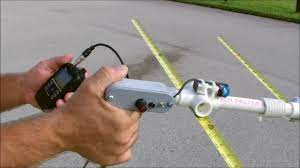
In a fox hunt we search for a hidden transmitter using 2 meter hand held radios and directional antennas (typically a small yagi). The transmitter is typically hidden in a park, typically on the west side of Longmont.
It sounds simple, but use the next couple weeks to build or check your antenna and refine your strategy. Its more fun if you team up with another operator, or better yet, a friend interested in learning about ham radio.
The hunt usually breaks into 2 parts. Part 1 is getting close. Part 2 is the last 100 yards.
In part 1, you typically drive in the direction indicated by the strongest signal when you turn your yagi antenna. But, be aware that most small yagis have poor front to back ratio – so you may be mislead 180 degrees in the wrong direction. Front to side ratio is better, so you are less likely to be sent 90 degrees in the wrong direction. If you work with a 2nd team that starts at the opposite end of the search area, you can triangulate and get close, quicker.
Toward the end or part 1, the signal is so strong that you can drive in any direction and still have a very strong signal. That is the time to switch to a very poor antenna (or no antenna) and drive in different directions, noting what direction gets the strongest signal.
You would think Part 2 would be quick and fast. But, it can be slow and frustrating. Even with no antenna, the signal is so strong that you can’t sense a direction to walk. I thought an attenuator would solve this. But, unless you have a very well shielded attenuator, it acts like an antenna and makes the problem worse. The best strategy I know is to shift the frequency on your radio up or down 5 or 10 KHz. By doing that, you will get a much weaker signal and have a better chance of walking in the right direction.
Another close-in technique is to use a harmonic of the fox’s frequency. Say the fox is at 146.400 MHz. The third harmonic is 146.400 MHz * 3 = 439.2 MHz, which is in the amateur 70 cm band. If your HT is capable of receiving that band, then setting your VFO to 439.2 MHz should give you an attenuated signal.
You might choose to join the 8AM breakfast at the Hidden Café and then move directly to the hunt.
Hope to see you Sept 10!
Ed
WA7EM
Build or Repair Your own Cables LARC Activity – Sat. July 23rd from 9:30am to 12:30 pm
Location: 950 South Sherman St in Longmont, in the rear of the building with parking lot entrance off Iowa Ave.
Time: Sat July 23rd from 9:30am to 12:30 pm
Beginner and Expert DIY cable builders — Please join your fellow Ham operators for a hands-on session of building or repairing any power and communications cables you desire for your station, mobile, or Go Box. If you’ve ever wanted to learn how or experiment with building your own cables, this is your chance to have special tools and experienced mentors to assist!
We will provide a few soldering stations, wide variety of power and communications wire, the club’s specialized cable crimpers & terminations for Anderson Power Pole connectors, various coax terminals, RJ-45 (8P8C) plugs/sockets, DB-9 M/F connectors, heat shrink wrap, fuse holders, ring and spade terminals, wire cutters/strippers, a label printer, free advice on cable design, and lots more. Experienced builders are encouraged to bring their own collection of spare cabling parts, tools, and wire to share and trade with their neighbors.
For more information or to inquire about special parts needs or ideas contact Will at [email protected]
Go-Box Quiz
LARC go-Box Quiz - What did you learn from reading the manual?
Quiz to test basic understanding of the Go-Box Manual , need to get at least 16 out of 20 correct to be approved to check out the Go-Box. Test is Open Book, good luck!
Learn more about HAM Radio
Nashua Area Radio Society is offering an online Boot Camp
Another LARC Fox Hunt
Fox Hunt May 27, 2023 – Save the Date
The next Fox Hunt will be Saturday, May 27th at 9AM until 12PM. – Meet at Golden Ponds Parking Lot
The Fox will be located somewhere in Golden Ponds Park at and will be transmitting on 146.565 MHz!
2651 3rd Avenue
Longmont, CO 80503
Team up with a friend(s). Get your equipment ready and come out for a couple hours of friendly competition as to who is the first to find the hidden 2 meter transmitter.
Those of you who participated in the recent “Tape Measure Yagi” building event have the primary antenna needed to participate.
I participated in the hunt on March 26 It was the 1st I have been in in a long time. I learned a lot. With tongue in cheek, I am reminded on 2 old sayings. The old cowboy saying “don’t bring a knife to a gun fight” and the Boy Scout slogan “Be Prepared”.
There are 2 stages to a Fox Hunt. 1) Go in the right direction when you are miles away” and 2) lower the signal strength when you get close.
Your 3 (or 4 or 5…) element portable Yagi will get you going in the right direction- sort-of. The front to side ratio on a yagi is high, but the front to back ratio is not a lot. So, you may end up going 180 degrees in the wrong direction. If you want, work with a team in a 2nd car, starting at the opposite end of the area and triangulate.
When you get close, the signal becomes so strong that your s-meter is pegged no matter how you point your yagi. One of the good features of FM is that the audio doesn’t change much with signal strength. For Fox Hunts, that good feature is a bad feature.
So, when you get close, you want to make the signal weaker so that your yagi is more likely to point you in the right direction. An attenuator (like https://www.qrpkits.com/attenuator.html ) will help you go the last mile or so
When you get within 100 yards of the fox, your Yagi will be of little use. And, even your stock “rubber ducky” will receive too much signal. You will want to switch to a tiny stub antenna – an inch or 2 of wire.
For those who really want to win, for the long distance step try https://www.iz3mez.it/wp-content/library/appunti/Double-Ducky%20Direction%20Finder.pdf . For the final 100 yards, try http://www.utaharc.org/rptr/wdr_fsm1.html
See you at the hunt! More specific info to come soon!
For more information on the hunt contact Ed (WA7EM) at [email protected]














 The Custom Facebook Feed plugin