W0KKI

LARC Longmont Halloween Parade Support

I volunteered with my club, the Longmont Amateur Radio Club and we provided communications support for the annual Halloween Parade in Longmont, Colorado.

As usual, I made a video on YouTube and here it is:

As usual, Doug, KE0SI asked on one of the LARC nets for volunteers. I did’t sign up right away but I eventually did put my name in the hat a few days prior after my XYL approved my attendance.

An email was sent out a few days prior with instructions to meet at pretty much the same place we did for the Boulder County Fair parade this past summer. While I did participate in that event, and a whitewater event, I’ve upgraded my ham equipment for service.

This time I was going to bring:
– a chest harness so its not awkward finding a place to clip my radio while not having the antenna inches from my skin and having 5 watts of 2 meter RF go through me
– a new waterproof Yaesu VX-6 that I manually programmed, set to lower power since our repeater was less than a 1/4 mile away
– a ball-point pen
– printout of the net instructions, parade route, and other pertinent materials
– water
– a snack
– layers of clothing including a hat
– a video camera
– a backup chest harness with another pen and an extra HT + backup battery for it

I also made a cheesy ID badge for myself so that my fellow club members would recognize me by my call sign.

I set all these things out the night before, making sure I charged my HT’s.

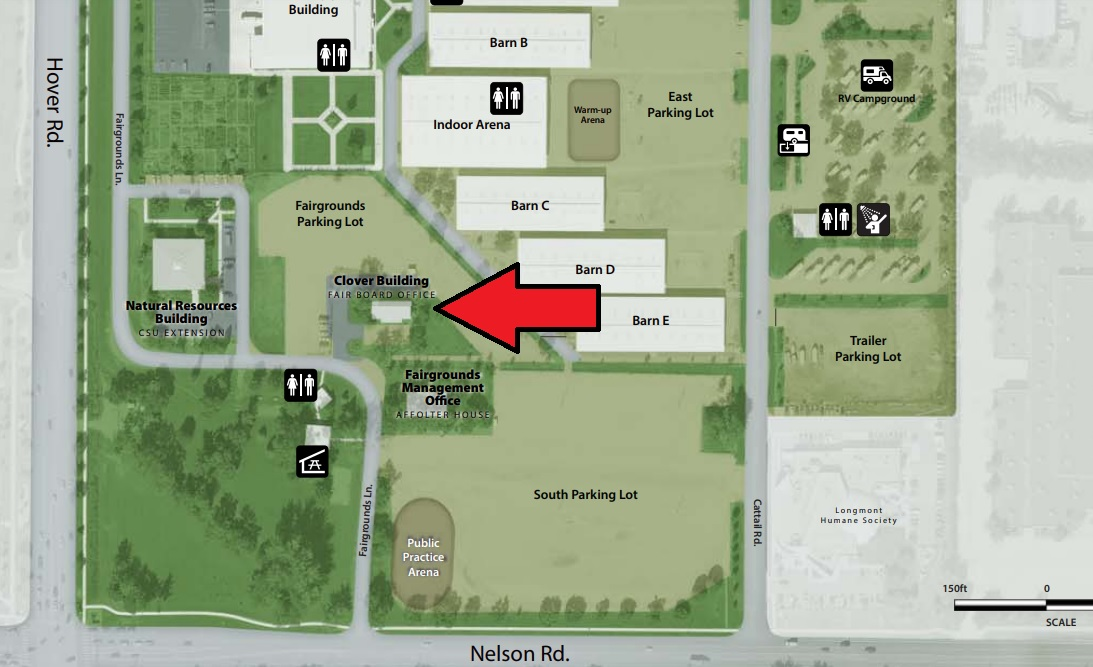
On parade day, my XYL and I drove up to Longmont and found parking right where we were going to meet. We walked over to the Luna Cafe and got breakfast which consisted of coffee and delicious breakfast croissants. Being near the park, we heard some of the bands practicing ahead of the parade.

It was close to 8:45am so we walked back over to where we parked and noticed a familiar bunch of the friendliest guys you’ll ever meet with reflector vests on. Everyone was chatting and enjoying the bluebird Colorado day and then we were briefed on our assignment and given our tactical location which were along the parade route.

After my XYL took a few photos of the group, we all hit the bricks and walked to our stations – basically on each corner of the parade route.

The net officially started and as the parade moved along its route, with each tactical station relaying when the head and tail of the parade passed them.

The parade itself was uneventful in terms of our need to relay emergencies and messages. There were of plenty of other volunteers from other volunteer agencies in Longmont assisting with the parade, which was quite long probably due to the beautiful weather. It seemed that everybody from Longmont was out in costume.

After the tail of the parade passed us and we notified Net Control, we moved 1 block over to Main Street for a little bit. Then when the tail of the parade passed, we followed along behind noting the hams that were at their tactical locations.

Finally, we got back to our gathering spot, turned in the vests and said our goodbyes.

Overall I had a great time serving with my club. The turnout of hams was great which was nice because we were stationed in pairs which made it fun to have a buddy. My choice of gear worked out well, especially the new chest harness to help keep things organized and available on a moments notice rather than reaching into my backpack like the last event.

There’s a call for volunteers for the next event that we support – the Turkey Trot, and of course, I volunteered to help.

73,

ae0rs

Scanners – a Lonely Ham’s Best Friend

I recently traveled out of my local (repeater) area to the Wasatch mountains in Utah, and had a positive experience using a handheld scanner to supplement playing ham radio.

Uniden Bearcat 125

About a year ago, I traveled to this area. Prior to traveling, I did what most responsible hams would do – I opened up CHIRP, did a proximity search on Repeater Book of my target area, and programmed in the local repeaters. When I got there, I heard nothing on the repeaters. Since I was in the mountains, deep in Little Cottonwood canyon most of the time, I expected this issue. I didn’t play ham radio when we weren’t at our hotel, so I didn’t know if I’d be able to hear or take part in banter when in Salt Lake City, where I regularly can at least connect to a WinLink machine from my Boulder, Colorado QTH.

So fast forward to this year. My Alinco and Baofeng HT’s search (as opposed to scan) really slow. Slow enough to miss activity. So I searched for a proper handheld scanner and found a deal on CraigsList that I couldn’t refuse – especially since I was able to stop by my local Denver Ham Radio Outlet on the way to see Craig.

A few definitions are in order:

scan: quickly go through programmed frequencies (i.e. known repeater outputs)

search: All frequencies in a given range/band (i.e. I don’t now who talks on what)

So I figured out that I really wanted to search, not scan, really. I read through the manual and learned how to use the search feature, and instructed my scanner to search through the 2m and 70cm ham bands. There’s also options to search other bands as well like:

  1. Police
  2. Fire/Emergency
  3. Ham
  4. Railroad
  5. Civil Air
  6. Military Air
  7. CB
  8. GMRS/MURS/FRS

There’s probably others. I have searched and listened to other interesting bands like Police, Fire, Railroad. Railroad was interesting, but Fire/Emergency is the most interesting – especially when there’s a natural disaster (forest fire) happening and all the coordination around it.

Police band isn’t interesting to me really, and listening to it makes you wonder what is wrong with people these days with all the crazy stuff that happens around here.

Ok so this time when we traveled to Snowbird, even though I set my HT’s to scan (programmed frequencies), I was able to use my handheld scanner to actually find a local repeater that I hadn’t programmed in! This repeater was pretty active while others weren’t active at all.

I looked up the repeater in Repeaterbook and wondered why CHIRP hadn’t included it in my proximity query. This is probably what the main problem was a year ago – the one active repeater I could hear in the canyon was not in the query result.

So I programmed in the repeater and when I had time (when my XYL was busy) I would listen for a Net so I could check-in at least. Interestingly, it was a 70cm repeater about 20 miles away. Maybe it had less multipath issues in the mountains? Who knows.

So I would say, if you don’t have a good (fast) scanning/searching HT, then buy yourself a cheap analog scanner to go along with it.

I’m looking for a HT that can search quickly like my scanner, because I don’t want to carry multiple HT’s if I can help it. I’m looking at a Yaesu VX6R but not sure if it can search/scan fast, unlike by Baofengs.

73,

AE0RS

Sawhill Ponds POTA Activation

Recently the Parks on the Air organization added more places where you could do a POTA activation. While looking at the map on the POTA.app website, I noticed a park really close to my QTH. It wasn’t even activated yet so I took it upon myself to activate it for the first time.


So the other day, my XYL and I went to Sawhill Ponds to do a quick POTA activation. A YouTube video is linked below.

I successfully activated it on FT4 and FT8 including getting 2 XE stations! I like to run FT4 whenever I can, since it’s less crowded so its easier to not be “talked over” by higher powered FT8 stations. I’m also impatient and FT4 QSOs are twice as fast as FT8.

Normally, obtaining digital QSOs doesn’t surprise me when QRP @ 5 watts, but this activation was a challenge because there are noisy power lines very close by, as well as a large solar station nearby — so I didn’t even try SSB.

The other surprising thing about this activation was that my QSO’s were all to the east and southeast of my station, but my radial was pointed southwest! Normally I can QSO with California stations on less than 1 watt but no one on the west coast was interested (or ignoring L-vertical physics).

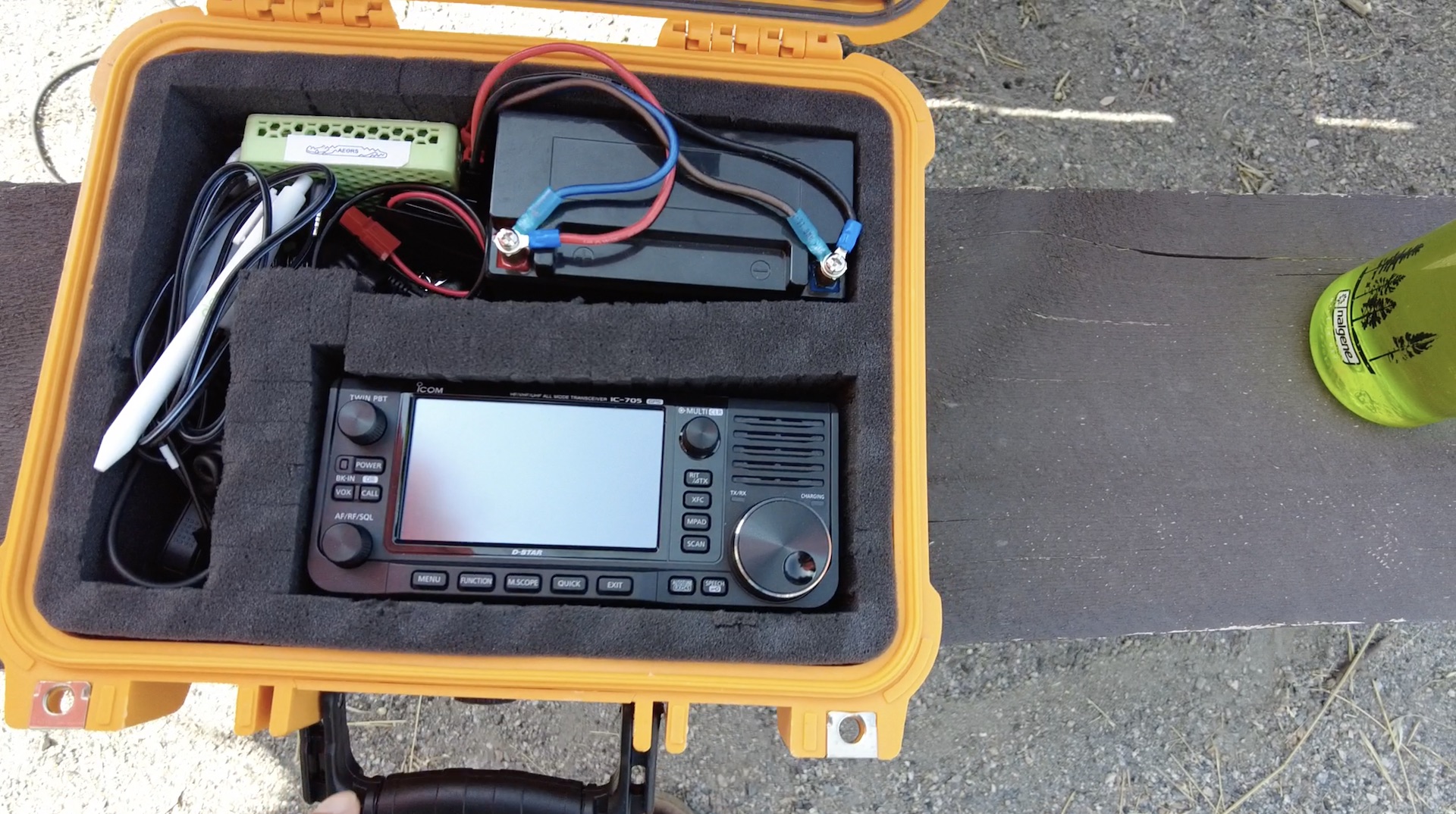
And lastly, I realized my TalentCell 12v battery was pretty noisy. When I connected it to my ICOM, the noise floor shot straight up. At QRP I was already challenged, so I elected not to run 10 watts to improve my chances at QSOs. I wish there was a way to bypass the BMS circuitry in this pack of LiFePO4 batteries so that I would have a lower noise floor. Sounds like an experiment with 16550 batteries is in my future.

73,

AE0RS