








The Longmont Amateur Radio Club is hosting a FREE Amateur Radio Licensing Exam session in partnership with the Patriot VE Team.
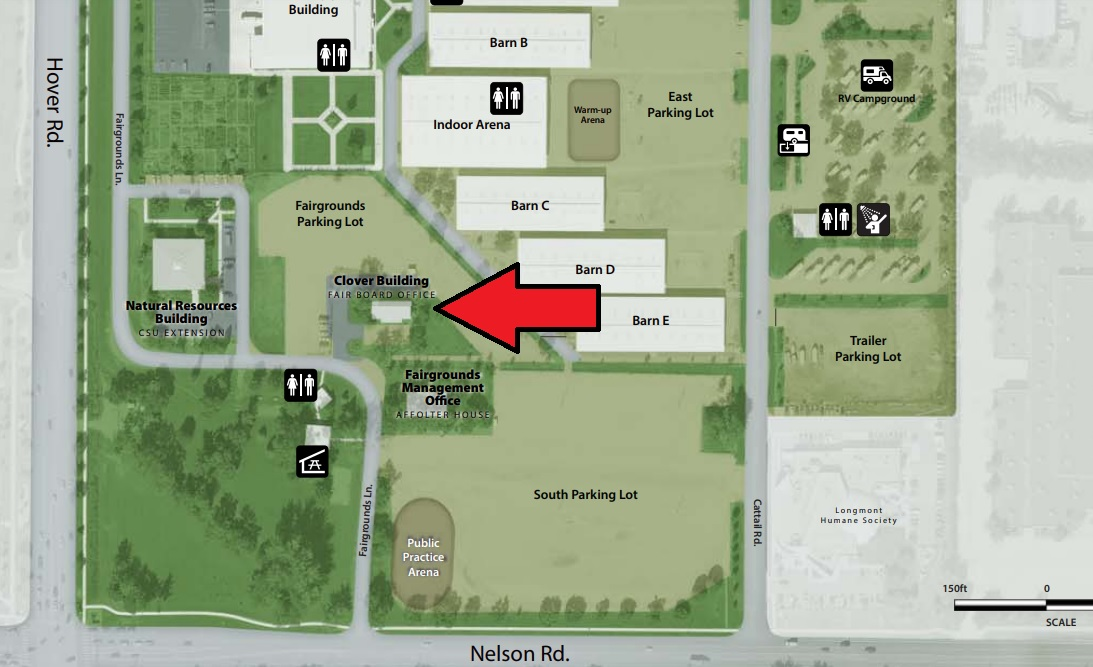
The test session will take place this Saturday, January 24th, starting at 9am at the Clover Building at the Boulder County Fairgrounds (w0eno.org/storage/2022/10/Clover-Building-Map.png).
If you plan on attending, please pre-register at: ham.study/sessions/696fc7306bd4c67db953bfa8/1
For more information and a list of upcoming test sessions, check out our web page at: w0eno.org/licensing-testing/
Hope to see you there!
Amateur Radio in 2026: Why the Next Year Could Reshape the Hobby—and How to Get Ready
Excerpt: 2026 may be a turning point for amateur radio. From evolving regulations and GNSS coexistence on 23 cm to AI-enabled tools, SDR everywhere, and the tail of Solar Cycle 25, here’s what’s changing—and how operators can thrive.
Amateur radio thrives on change: new modes, new bands, new ways to serve our communities. As we head into 2026, several forces are converging—regulatory updates, maturing technologies, and shifting propagation—that could make the next year feel different from the past few. Whether you’re a new Technician or a seasoned Extra, here’s a clear, practical outlook and a checklist to stay ahead.
Key takeaways
- Expect national regulators to continue clarifying how 23 cm activities should coexist with GNSS.
- Solar Cycle 25 will begin descending, but HF will still deliver great DX—especially on 10–15 meters during daylight.
- SDR-first stations, open-source digital voice, and AI-assisted operating will become more mainstream.
- EmComm remains vital as severe-weather and infrastructure events increase—win with power resilience and portable readiness.
- Clubs that simplify digital onboarding (logging, FT8/VarAC, DMR/M17) will grow; clear on-ramps matter in 2026.
What could make 2026 different
- Regulatory shifts to watch
- 23 cm (1240–1300 MHz) and GNSS protection: Expect continued national-level guidance on power limits, antennas, and proximity to sensitive receivers. Portable and EME activity may need more planning and documentation (station profiles, ERP calculations, directional use).
- Digital rules modernization ripple effects: With symbol-rate limits removed in many places and bandwidth-centric approaches growing, watch for new digital experiments on HF and VHF/UHF (higher-speed, more robust links, better spectral efficiency).
- Technician engagement on HF (US context): There’s long-standing interest in expanding voice/digital HF privileges for entry-level licensees. Even without formal changes, clubs and nets are increasingly building bridges from VHF to HF with coaching, loaner gear, and digital-first mentoring.
- Interference enforcement and RFI: Expect increased attention to consumer-device noise (solar inverters, switching supplies, LED lighting). Proactive station RFI mitigation and documentation will pay off.
- Propagation and Solar Cycle 25
- Cycle 25: After a surprisingly strong 2024–2025 peak, 2026 enters the descending phase. Good news: daytime upper-HF bands (10–15 m) will still be productive, with more variability. Be opportunistic—watch near-real-time MUF maps and cluster spots, and seize short 10 m openings.
- Low bands: Nighttime conditions on 40/80 m may slowly improve for regional and intercontinental work as solar activity cools. Vertical arrays, receive-only antennas (flags, loops), and low-noise sites will shine.
- Technology trends shaping the shack
- SDR-first stations: Affordable transceivers and panadapter dongles make spectrum awareness standard. Operators who log and spot from the waterfall will run more efficiently.
- Digital modes evolve: FT8/FT4 remain gateways, but conversational modes like VarAC, robust keyboard-to-keyboard on weak paths, and JS8Call continue to grow. Expect better automation and integration with station control.
- Open digital voice: M17 continues to gather community support as an open alternative to D-STAR, DMR, and C4FM. Watch for more native-capable radios or add-on solutions.
- AI in the shack: Expect smarter noise reduction, autoclassification of signals, smarter spotting, log hygiene (duplicate checking, QSL workflows), and contest strategy helpers.
- Mesh and low-power networking: LoRa-based APRS, Meshtastic-style neighborhood links, and lightweight telemetry will spread through clubs and events.
- Public service and resilience
- Power is king: In a year of grid stresses and extreme weather, off-grid readiness becomes a differentiator. Lithium iron phosphate (LiFePO4) batteries, MPPT solar controllers, efficient radios, and lightweight masts keep you active when it counts.
- Interoperability: Cross-band and cross-mode skills—moving between analog FM, digital voice, NBEMS/Winlink, and HF NVIS—will be especially valuable during incidents.
- Documentation: ICS forms, frequency plans, and pack lists standardized in clubs will accelerate deployment and reduce friction.
Operating playbook for 2026
Band-by-band focus
- 10 meters (28 MHz): Watch for sudden midday and afternoon openings. Great for 10 W and simple antennas. Favor FT8/FT4 when marginal; enjoy SSB/CW when it pops.
- 12–15 meters: Reliable daytime DX windows. Excellent for modest beams or rotatable dipoles; verticals still do well near saltwater.
- 17–20 meters: Bread-and-butter DX bands across most of the solar day. CW and digital remain steady when SSB fades.
- 30/40 meters: Evening and nighttime stalwarts. NVIS on 40 m supports regional traffic; 30 m is digital/CW gold.
- 60/80 meters: Nighttime regional coverage, wintertime strengths. Invest in receive antennas and quieting.
- VHF/UHF: Leverage digital voice (DMR/D-STAR/C4FM/M17) and APRS; watch 6 m for sporadic E; try 23 cm with attention to local guidance and best practices.
Station upgrades that punch above their weight
- Noise mitigation: Ferrites, chokes on SMPS lines, and good bonding reduce fatigue and improve copy more than you might expect.
- Antenna agility: Lightweight telescoping masts, linked dipoles, and efficient tuners enable band agility and rapid deployment.
- Logging + spots: Use an integrated logger with cluster/skimmer support; automate QSL and LoTW uploads to keep your log clean and current.
- Digital starter kit: A clean audio chain (USB interface or good soundcard), accurate time sync, and a simple waterfall workflow guide for new operators.
Club strategies that win in 2026
- One-hour digital on-ramp: A beginner-friendly session teaching FT8/FT4/VarAC setup with a printed checklist. Send them home making QSOs right away.
- Portable-first events: Monthly POTA/SOTA/Field Days build real skills and social stickiness. Focus on packing lists, setup roles, and teardown.
- Mentored upgrades: Small study cohorts and on-air practice nets for CW or digital voice create continuity and retention.
- Interference labs: Regular RFI “show-and-fix” nights help members audit their shacks and neighborhood noise.
- Youth and makers: Tie in with microcontrollers, satellite passes, high-altitude balloons, and mesh projects to attract builders.
A practical compliance mindset for 23 cm
- Know your environment: Map nearby GNSS-sensitive facilities if guidance suggests caution zones.
- Log station parameters: ERP, antenna pattern, azimuth/elevation during operations. Directional antennas and careful aiming can reduce risk.
- Be portable-smart: If you operate EME or long-range portable, carry a basic station profile and be ready to adjust power or angle as needed.
- Stay current: Follow national society updates and club briefings for any 2026 changes.
Your 2026 readiness checklist
- Update firmware/software for your radio, tuner, and logger; back up configs.
- Build or refine a power plan: LiFePO4 battery, charger, fused distribution, and a solar option.
- Prep a grab-and-go kit: Linked dipole or end-fed half-wave, coax, mast, stakes, throw line, headlamp, and laminated quick-reference cards.
- Clean up your digital chain: Verify audio levels, CAT control, time sync, and macros.
- Choose one “growth” path: CW practice, satellite ops, M17/DMR talkgroups, or meshing—ship something new this quarter.
- Document your station: Photos, wiring diagram, and a frequency plan. Future you will be grateful.
- Engage with a net or contest: Even a few contacts sharpen skills and verify your station end-to-end.
Final thought Change is the constant that keeps amateur radio vibrant. 2026 won’t upend the service—but it will reward operators and clubs who lean into smarter digital practices, resilient power, clear documentation, and a learning mindset. If you pick one upgrade for your station and one upgrade for your club, you’ll feel the difference on the air.
Suggested categories: Amateur Radio, Operating, Technology, Public Service Suggested tags: 2026, Solar Cycle 25, 23 cm, Digital Modes, SDR, M17, DMR, FT8, VarAC, EmComm, POTA, SOTA
Call to action: What’s the one skill you plan to level up in 2026—digital voice, CW, portable ops, or station noise control? Share your plan and we’ll build a follow-up guide around it.
 The Custom Facebook Feed plugin